



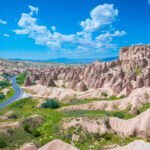
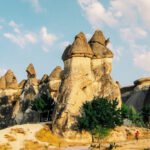
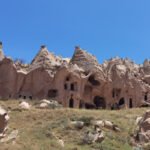
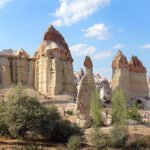
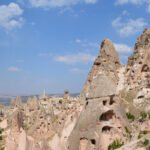
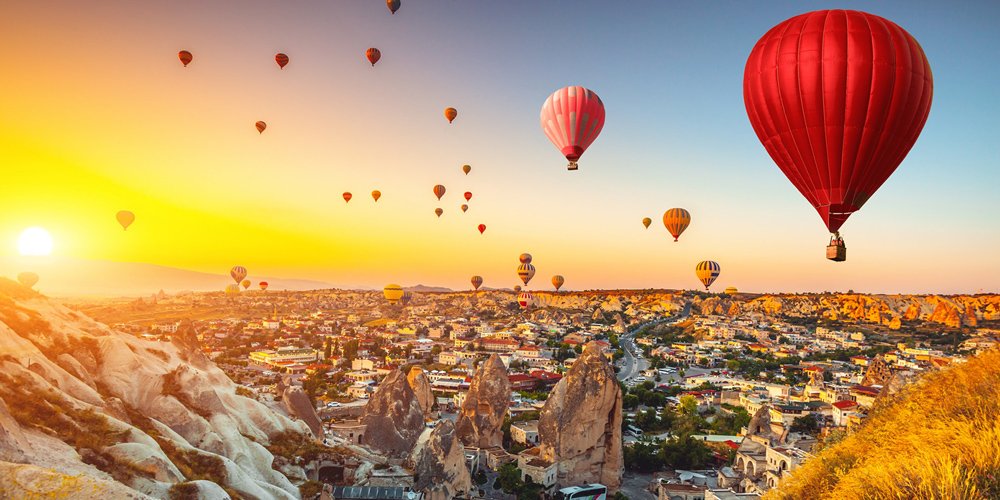
Dervent Valley, Zelve Open Air Museum, Pasabag Fairy Chimneys, Avanos, Goreme Open Air Museum, Uchisar.
Itineraries Of Guided Tours In Cappodocia
RED TOUR
Full Day
Tour route:
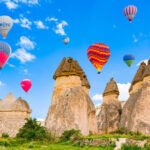
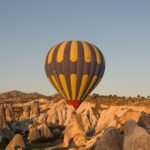
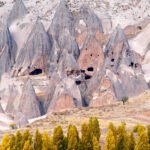
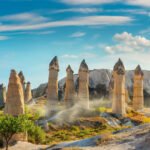
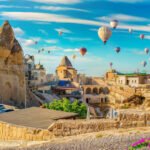
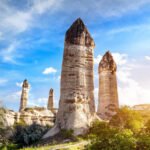
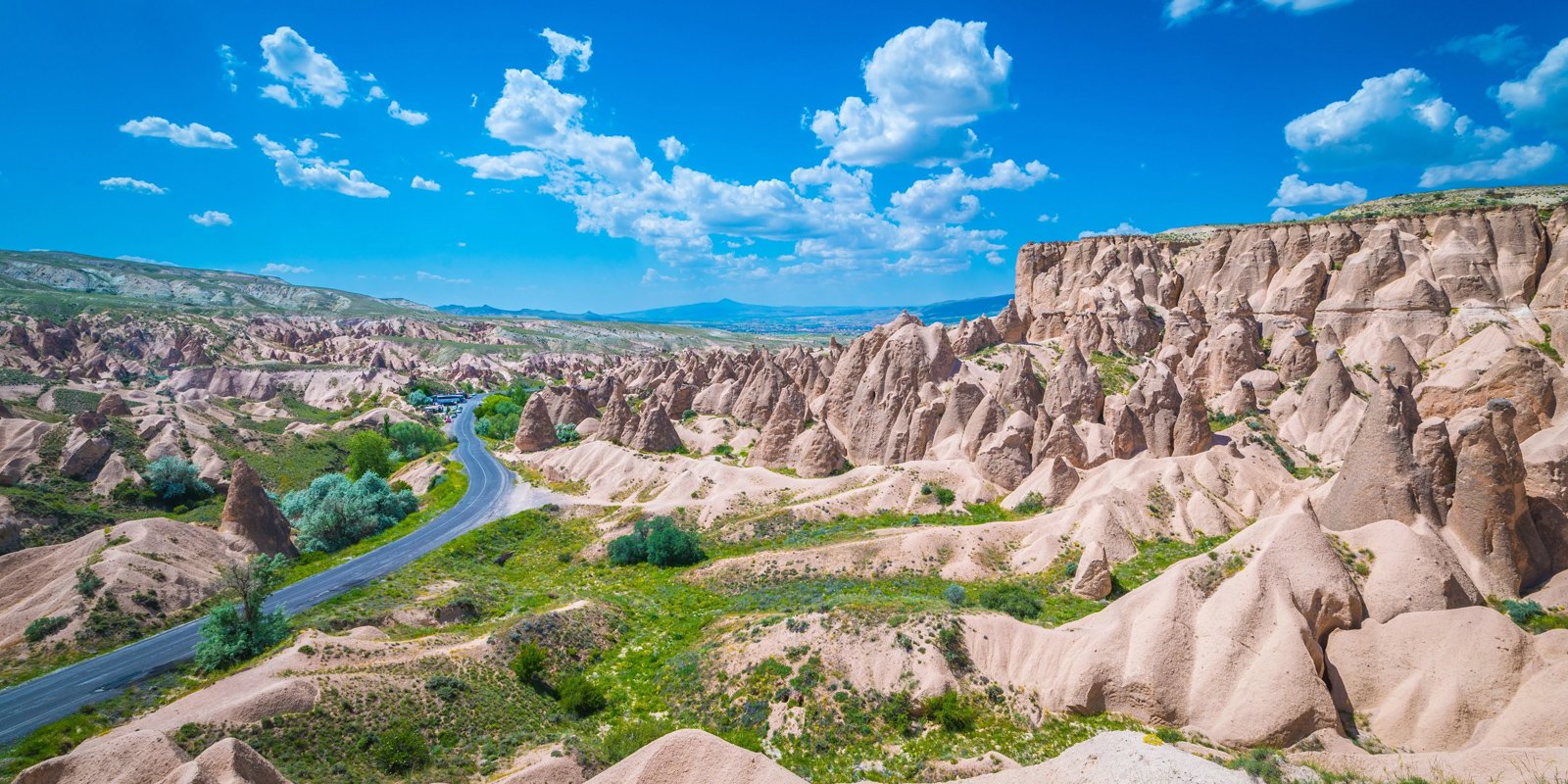
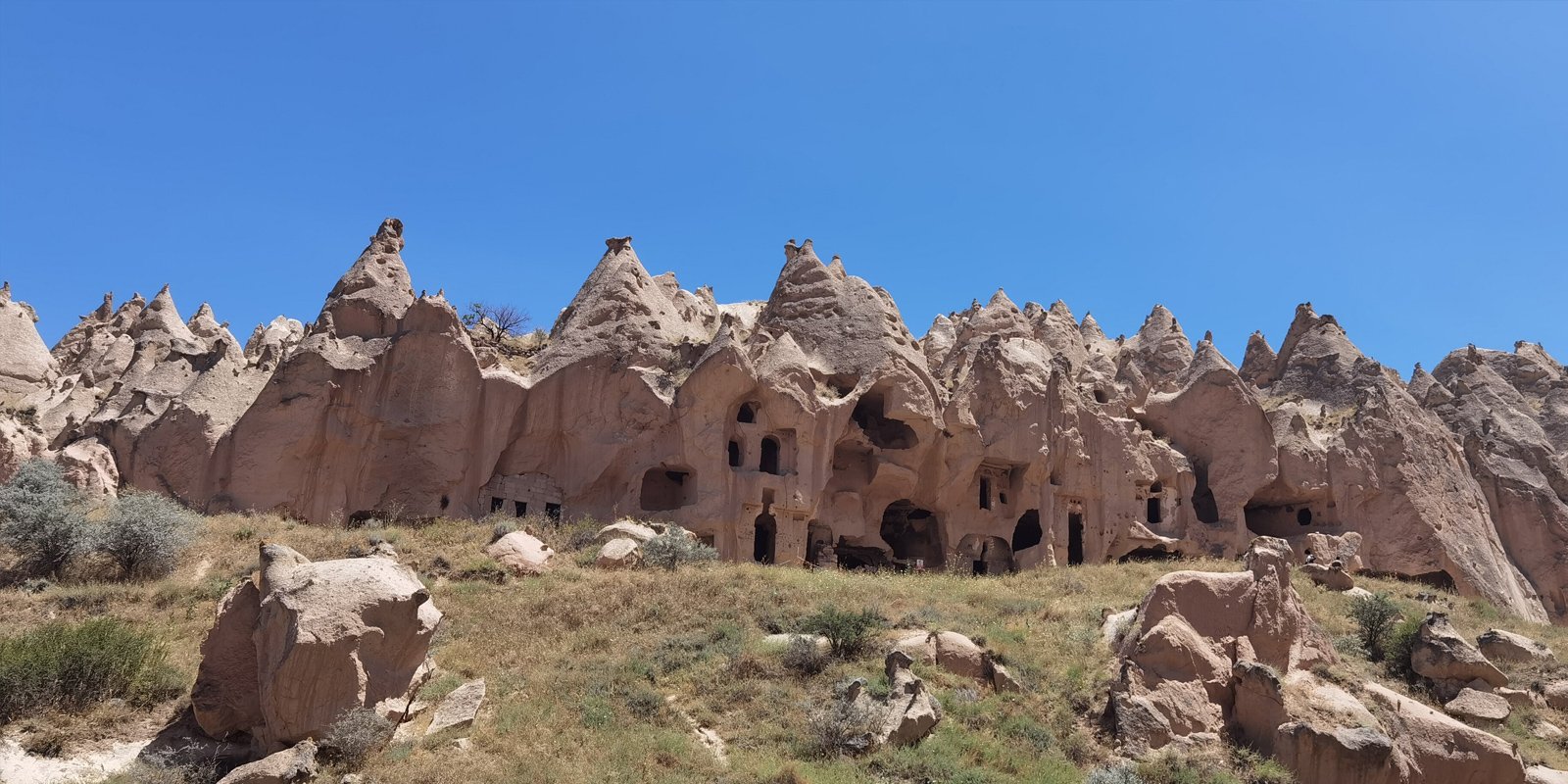
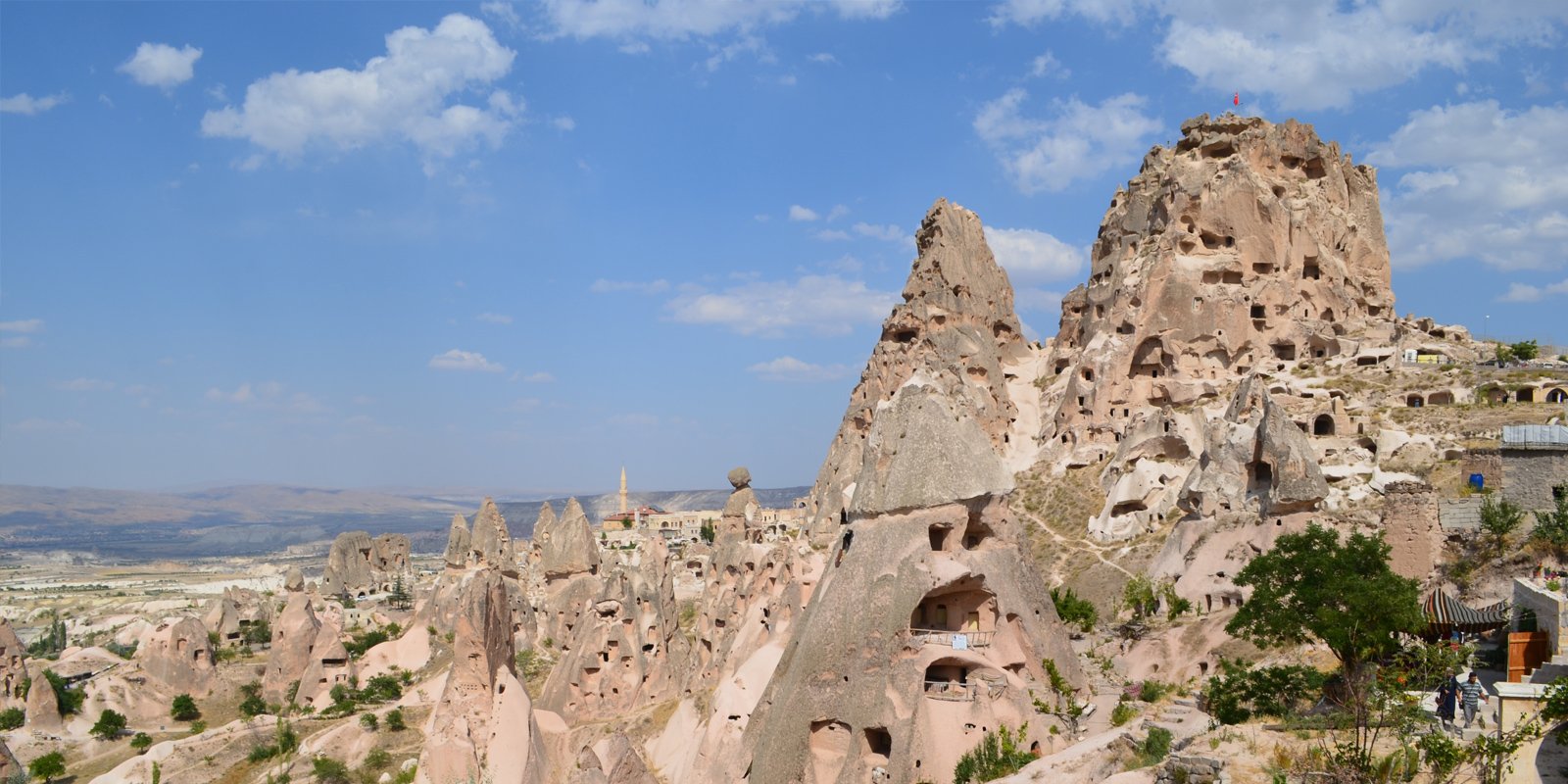
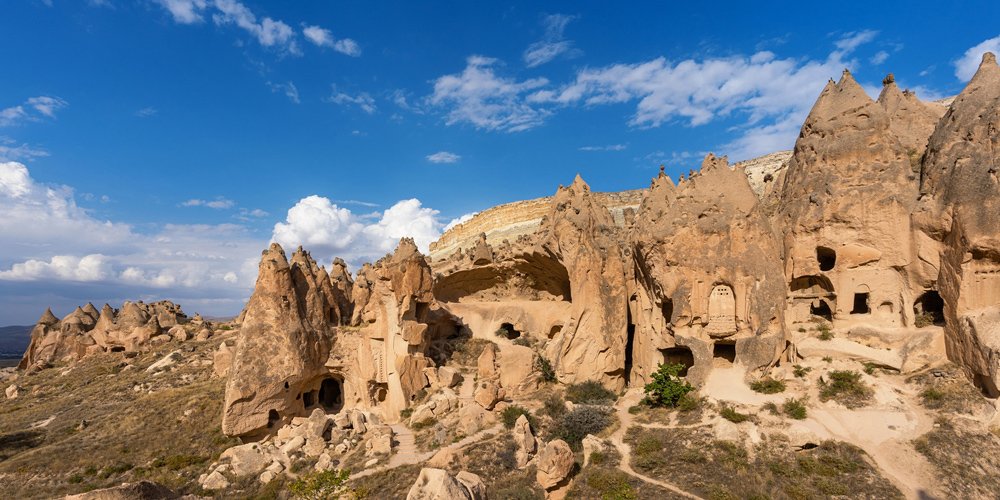
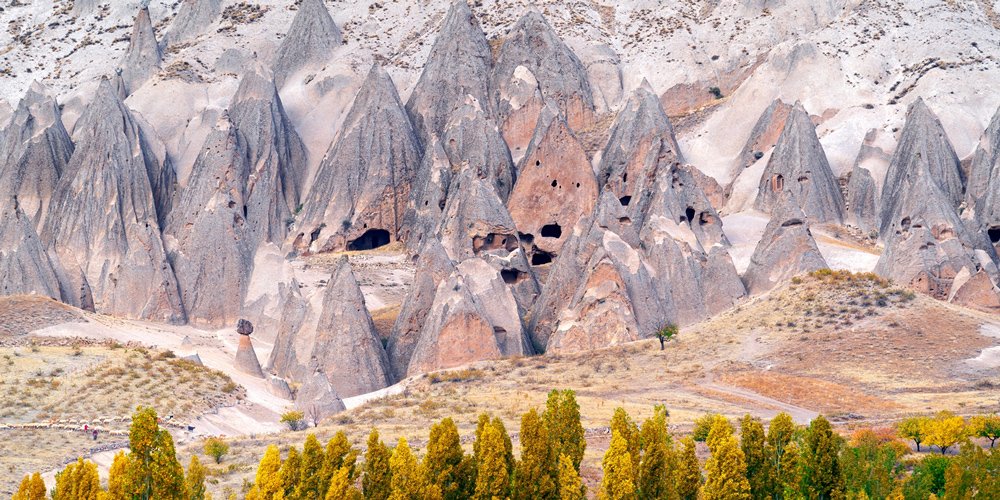
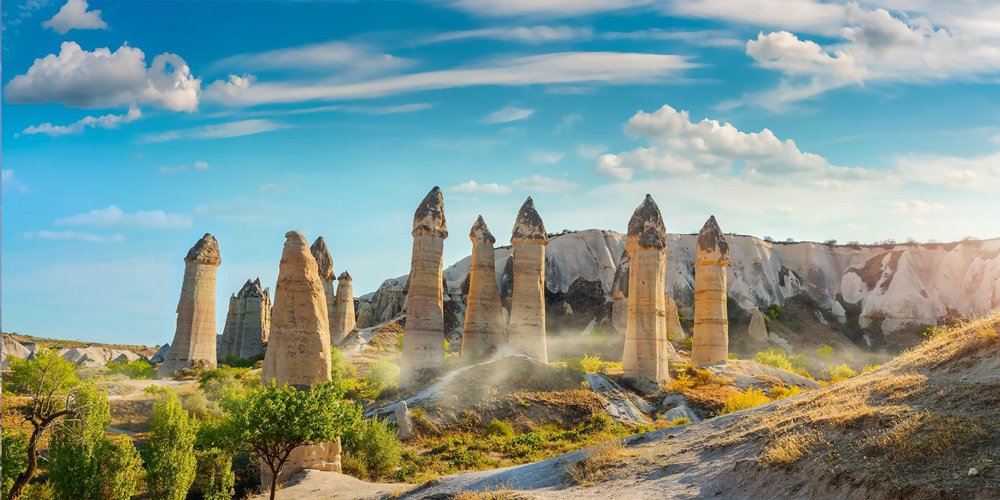
Our first real encounter with Cappadocia’s moonscape is in the Dervent Valley, where the rock formations are amazing. A walk through the Zelve Open Air Museum is a journey into the past, with its troglodyte houses. This is one of the earliest inhabited and most recently abandoned monastic settlements in Cappadocia. After Zelve we visit the “fairy chimneys” of Pasabag, also called the Valley of the Monks because Christian hermits chose to place cells and hermit churches in these three-headed pinnacles symbolic of the Holy Trinity; it is possible to see all the stages of the formation of the fairy chimneys at this spot. From here we leave for Avanos, a center of earthenware art since 3000 BC, for a demonstration in a traditional pottery workshop. After lunch in Avanos, we visit the famous Goreme Open Air Museum to see the best examples of Byzantine art in Cappadocia. These are found in rock-hewn churches with frescoes and paintings dating back to the 10th century. We complete the tour with a visit to Uchisar Castle, which offers panoramic views of the valleys of Cappadocia.

GREEN TOUR
Full Day
Tour route:
Kaymakli Underground City, Ihlara Valley, Selime Village, Pigeon Valley.
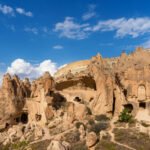
The tour begins with a trip underground to the Underground City of Derinkuyu; one of the largest and deepest such settlements in Cappadocia. The Derinkuyu complex has seven floors, each containing fifteen “dwellings,” each capable of holding about one hundred people. There are several churches and chapels; a veritable labyrinth of tunnels. Because of the danger of collapse, the complex can only be visited up to the fifth floor. From here we leave for Ihlara Canyon and walk through the canyon to the village of Belisirma, ancient Peristrema. Located near the Melendiz River, this is known as the “Valley of Heaven.” Churches carved into the rock form a gallery of ancient paintings that are remarkable for their accuracy. We have lunch in Belisirma at a local restaurant by the river.
After lunch, we continue to Selime Monastery. We will visit this 13th-century monastery carved into the rock by pre-Christian monks. On the way back to Goreme, we will stop at the spectacular viewpoint overlooking the Pigeon Valley.






BLUE TOUR
Full Day Rose Valley & Valley Of The Pigeons
Tour route:
Rose Valley, Cappadocia Valley from Uchisar to the City of Goreme,
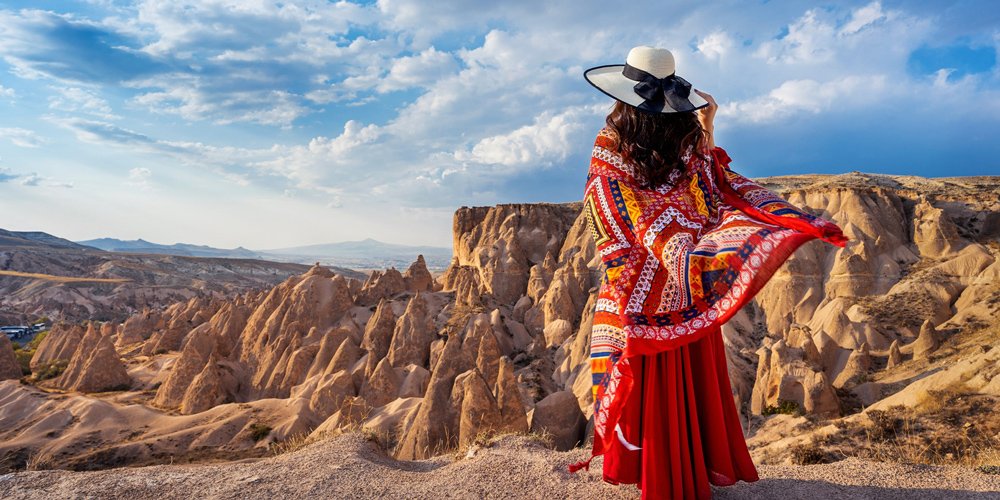
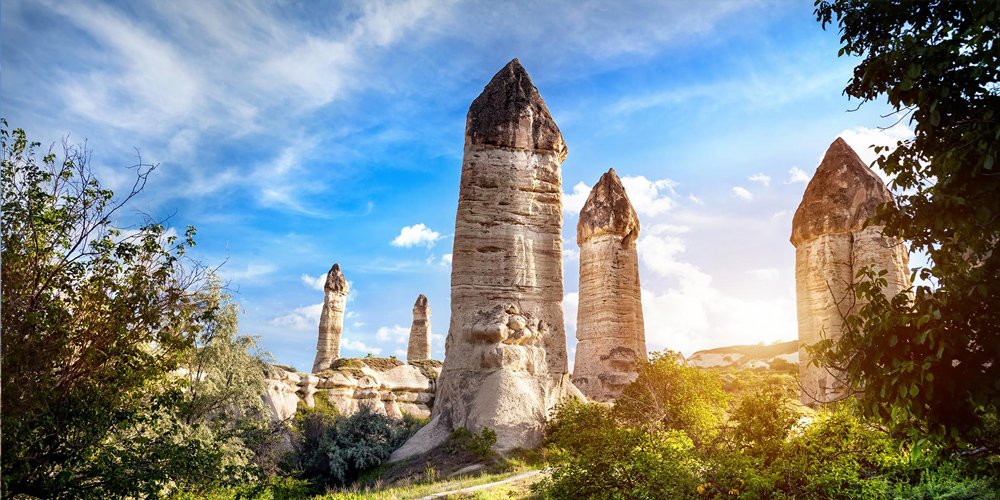
Walking about 4 km into one of Cappadocia’s most striking valleys, Valle Rosa, with its fabulous volcanic rock formations, lies in the heart of Cappadocia but far from the crowds of tourists. Hermit churches carved into the rock with frescoes and paintings in keeping with the valley’s meditative atmosphere have remained intact since the beginning. After lunch, we walk through another fascinating Cappadocia valley from Uchisar to the town of Goreme. The pigeonholes, carved along the slopes of the valley, are better seen nowhere else. The harmony of the different colors of the rocks and the silence rest our souls. The walk begins with a descent from the Uchisar viewpoint and ends right in Goreme. It is an excellent opportunity to take unusual photos of Cappadocia.
CAPPADOCIA, LUNAR LANDSCAPE; the formation, fairy chimneys , underground cities, valleys and villages
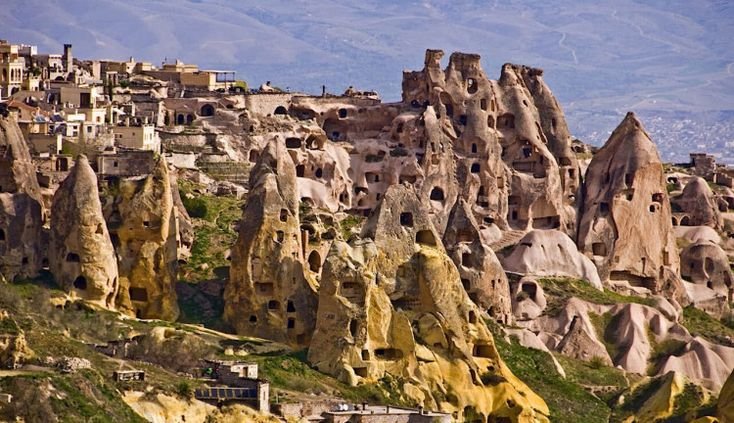
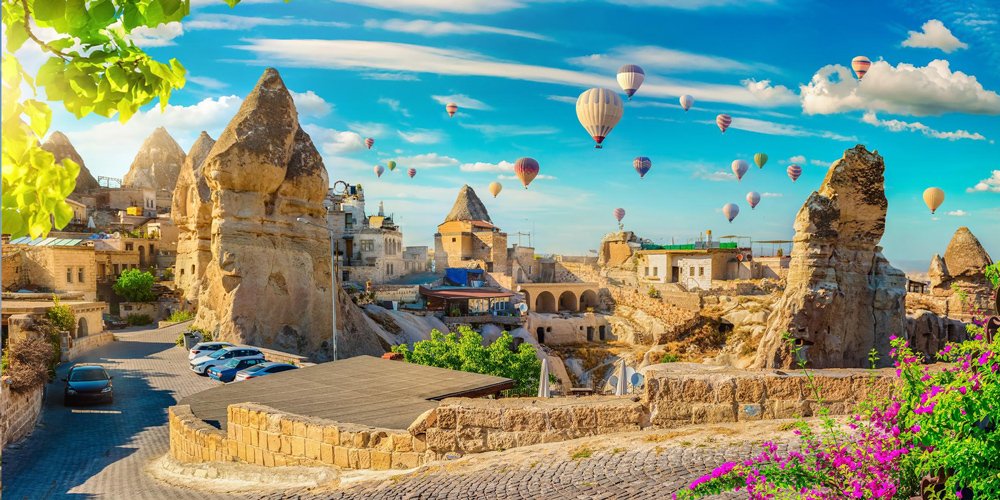
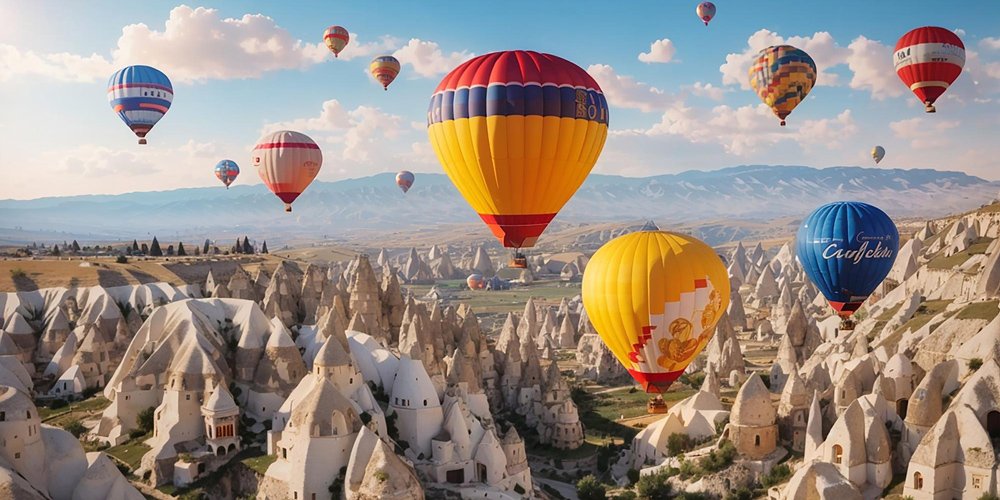
In central Anatolia, lies one of the geological and archaeological wonders of the world. It is no less than 300 km² of fantastic “ moonscape” sprinkled with stone pyramids and cones fitted with caps , large circular pinnacles and obelisks, created by nature and transformed into amazing hollow colony complexes by a remote people. Over the centuries, Christian settlers expanded the underground system of dwellings and decorated it with frescoes and rudimentary designs.
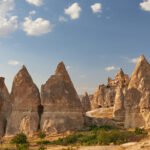
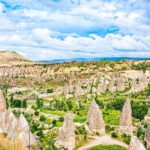
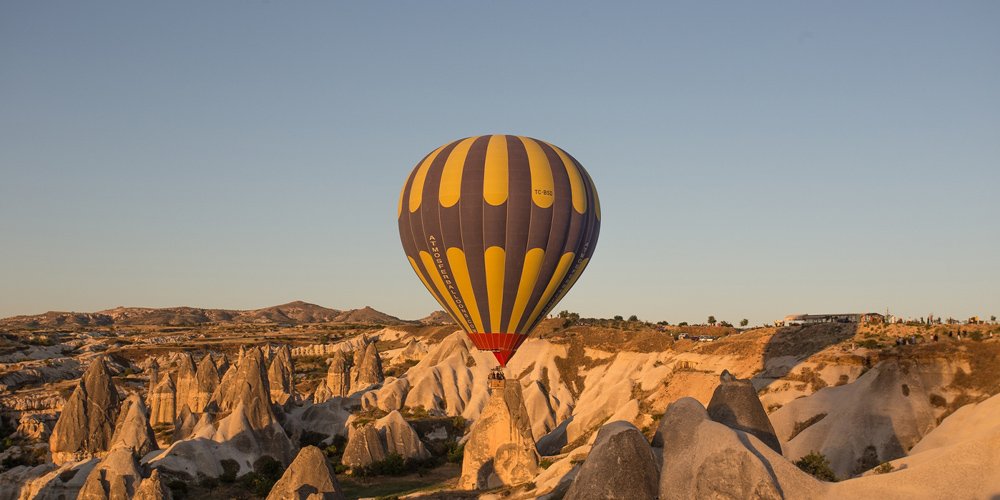
Approaching Cappadocia, visitors will surely be struck by the wide rows of dwellings carved into the rock and the “fairy chimneys” that, at first glance, appear to be artificial , but are actually the work of nature’s whims. The region is dominated by natural caves and curious rock formations; small or large, massive or thin, they may rise from the bottom of a cliff or rise from the slope of a hill, isolated or in groups, showing off a wide range of colors with hues ranging from pink, ochre and light blue.
Tourists cannot help but wonder how such a landscape was formed.
Probably during the Tertiary period of the Cenozoic era, thirty to sixty million years ago, the Cappadocia region was the scene of violent volcanic activity. At least three major volcanoes, the Erciyes, Hassan, and Melendiz, rattled the earth’s crust for tens of thousands of years, with eruptions of lava, boulders, and ash. As a result, the present region is located on a plateau formed by the gradual accumulation of volcanic debris. Over the millennia, the plateau was gradually eroded by the Kizilirmak River and its tributaries. Strong winds, violent rains, frosts and subsequent earthquakes helped reinforce the erosion process, so the magical “moonscape” of Cappadocia was created.
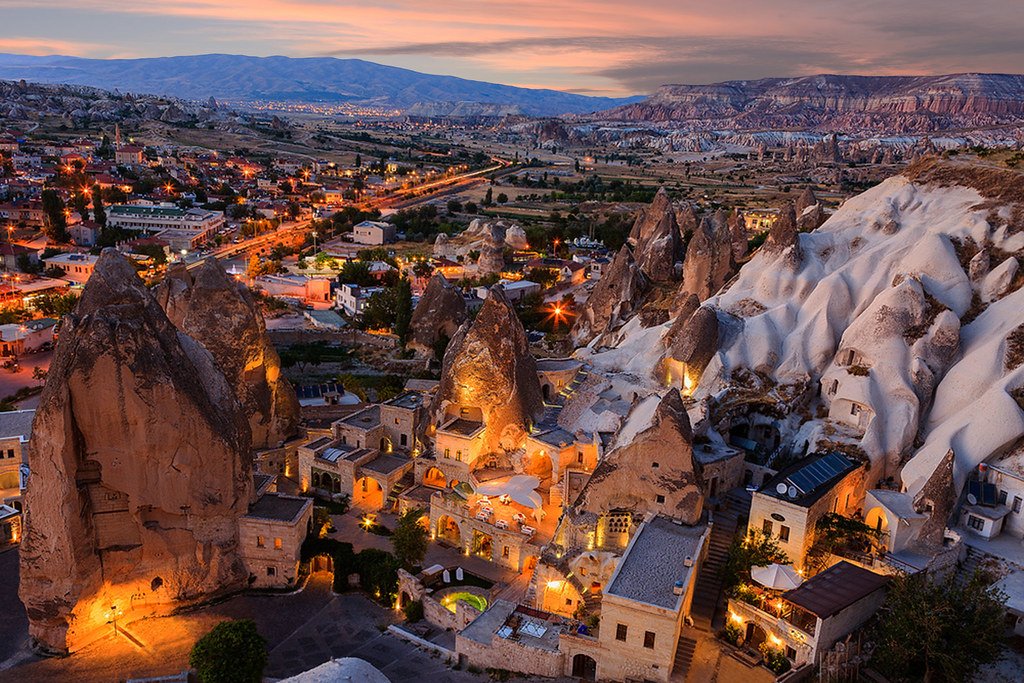 We are faced with a land that of the fantastic, and this feeling is so strong that one almost has the impression of being on another planet. Agglomerates of rocks of the strangest shapes fill the hills and gorges, with likenesses of animals, mushrooms, caricatures of famous people, all incredibly shaped by the natural elements.
Temples carved into the rock, underground colonies and stairways cover the precipices and perpendicular walls, hollowed out and connected by a system of tunnels and galleries.
Every stone is a relic of the past. Every crevice in the ground conceals an ancient dwelling, tomb or shrine. Most of the caves are almost inaccessible, or so it seems, precisely because their makers were masters in the art of camouflage and pitfalls. The various tunnels and underground passages were designed to confuse intruders and lead them into deadly traps. A seemingly dead-end tunnel could have a cleverly concealed outlet to the outside, while a seemingly safe passage could lead to a trap.
Cappadocia preserves excellent examples of early Christian churches and chapels, whose style and features detect various artistic influences; from Mesopotamia, Syria, Palestine, Armenia, and early Christian and Byzantine art. Some churches are very well preserved; we find them clustered or stacked, over precipices or underground. In Cappadocia National Park there are more than 250 churches and chapels distributed among the villages Goreme, Urgup, Zelve, Uchisar, Ortahisar, Ihlara, Cavusin and Mustafapasa.
Early murals represent primitive art. Their makers were monks, inspired by religious devotion, completely unaware of anatomical proportions and perspective. The earliest iconographies discovered so far reveal a Syrio-Palestinian influence, while works dating to a later period show Byzantine tendencies.